

Summary
Sabrina de Branco joined Domtar in 2021 to lead our sustainability efforts. As global chief sustainability officer, she brings more than 18 years of multi-national sector experience to the table, informing not only our 2030 Sustainability Strategy and long-term goals, but also day-to-day decision making.
One year ago, Domtar released its Sustainability Strategy, and we’ve already made significant progress toward our 2030 sustainability objectives and targets in the areas of Environmental Stewardship, Our People and Communities, and Responsible Business. At the helm of this multi-year effort is Sabrina de Branco, Domtar’s global chief sustainability officer.
Domtar owner Jackson Wijaya has entrusted Sabrina and her team with implementing our sustainability strategy in areas such as innovation for sustainability and climate, sustainability governance, reporting, risk management, and strategic partnerships and engagement for sustainability.
Sabrina was a natural choice for this position. Prior to joining Domtar in 2021, she was an established leader in Brazil, with many years of experience in multinational companies, leading projects such as mining and reforestation for pulp and paper production. She also has expertise in stakeholder management, shared value creation, and brand and reputation management, and she has earned two Excellence in ESG awards from Open Mind Brazil.
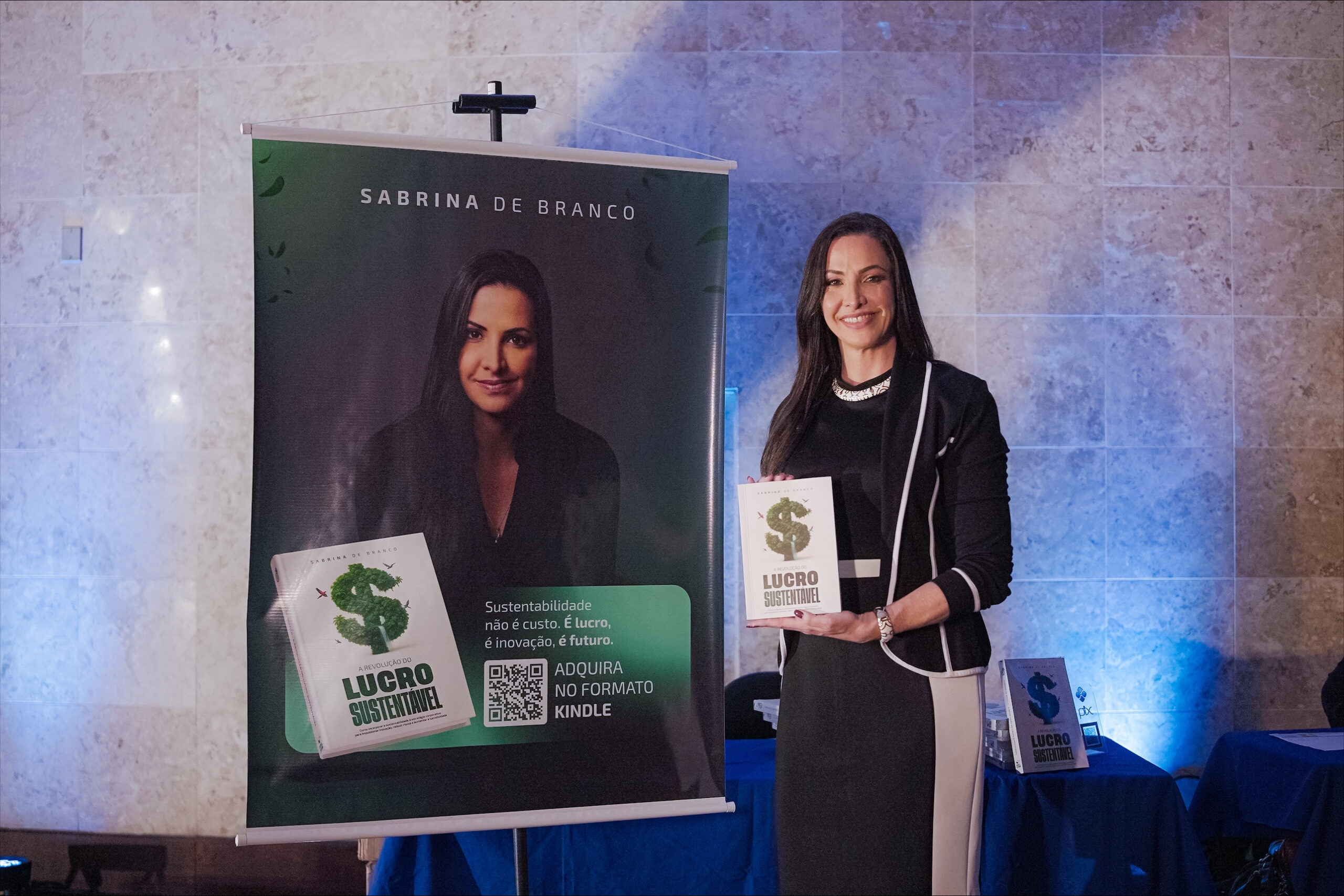
“I’m proud of the path I have built in the sector, including being the first woman elected to chair a major trade union in the Brazilian pulp and paper industry,” says Sabrina, a multi-disciplinarian who recently authored a book about incorporating sustainability into corporate strategy to amplify competitive advantage. “Experiences like that taught me that progress often comes from bringing different perspectives together, listening carefully and building practical solutions that can move organizations forward.”
Sabrina recently moved from Brazil to our headquarters in Fort Mill with her husband and seven-year-old daughter. We spoke with Sabrina about her passion for sustainability and the future of our industry.
At Domtar, we strive to put sustainability at the heart of everything we do. What does this mean to you?
To me, it means recognizing that sustainability is not separate from business performance; it is part of how we build a stronger business for the long term.
In today’s environment, companies are expected to show measurable progress, credible governance and greater transparency across issues such as climate, fiber sourcing, human rights, community impact and supply chain responsibility. Customers, regulators, communities and employees all expect more, and those expectations are not going away. That means sustainability must be connected to the decisions we make about operations, investments, innovation, partnerships and reporting.
It also means being practical. In our sector, sustainability increasingly shows up through circular solutions, resource efficiency, traceability, more robust disclosures and stronger collaboration across the value chain. That aligns well with where the market is heading. Global standards continue to push companies toward more rigorous, investor-relevant sustainability disclosures, while supply-chain regulation and due diligence expectations are increasing the importance of traceability and responsible sourcing, as well as human rights.
How have you built your team to achieve Domtar’s goals and execute sustainability initiatives effectively?
I have been very intentional about building the team around the capabilities we need most to create value for Domtar. Sustainability today requires much more than passion or subject matter knowledge alone. It requires governance, data, cross-functional influence, external engagement and the ability to turn strategy into practical business action.
That is why our team is structured around three core areas.
- Virginie Chambost leads Innovation for Sustainability and Climate, with a strong focus on carbon and emissions management, climate strategy, resource optimization and sustainability-driven innovation.
- David Marshall leads Sustainability Governance and Reporting, which covers governance mechanisms, sustainability-related risk and compliance monitoring, disclosures, data management, materiality and reporting alignment.
- Paige Goff leads Strategic Partnerships and Engagement, which focuses on stakeholder relationships, market engagement, customer support, partnerships, recognition and education.
That structure reflects the reality that sustainability leadership today depends on both strong internal systems and strong external credibility. I also believe empowerment comes from clarity of purpose. Each member of the team understands that our role is not simply managing programs. Our role is to help the company manage risk, strengthen reputation, support growth and identify opportunities where sustainability and business value come together.
We hear a lot about how sustainability is embedded across Domtar. What does that mean?
Sustainability is not owned by one team alone. Our team provides the strategy, governance, frameworks, partnerships and expertise, but real progress only happens when sustainability is integrated into how the whole business operates.
That is why our governance model matters so much. It helps ensure that sustainability priorities are informed by leadership, grounded in business realities and supported by subject matter expertise across the company.
In practical terms, embedding sustainability means asking better questions earlier. How can we reduce emissions while improving efficiency? How can we create more value from byproduct streams? How can we strengthen trust with Indigenous communities, customers and other stakeholders? How can we make sure our innovation pipeline supports both business growth and sustainability goals? Those are not “sustainability department” questions. They are business questions, and that is exactly where sustainability needs to live.
Closing Thoughts from Sabrina de Branco
“The success of our work depends on how well people across all areas understand the role they play within Domtar’s sustainability strategy. When individuals recognize that their day-to-day actions are what truly drive progress toward achieving our company’s goals and commitments, we create stronger alignment,” says Sabrina.
“We are all working toward a shared purpose and striving for the best outcomes for the company. This will undoubtedly be our most meaningful indicator of success.”