


Summary
Tensie Whelan is a Distinguished Professor of Practice Emerita and Senior Advisor, New York University Stern Center for Sustainable Business and shares her expertise as a member of Domtar’s External Sustainability Advisory Committee. She talked with us about sustainability measurement and return on sustainability investment (ROSI).
A few key points:
- ROSI helps businesses understand financial returns generated by sustainability investments
- Sustainability measurement considerations need to be embedded into business strategy and financial planning from the outset
- ROSI supports revenue by influencing pricing power, customer demand, and market access
As the Senior Advisor for the New York University Stern Center for Sustainable Business, Tensie Whelan knows a thing or two about sustainability measurement.
Tensie’s 35 years of experience working on local, national and international sustainability issues make her a leading voice on sustainability measurement and understanding returns on sustainability investment (ROSI).
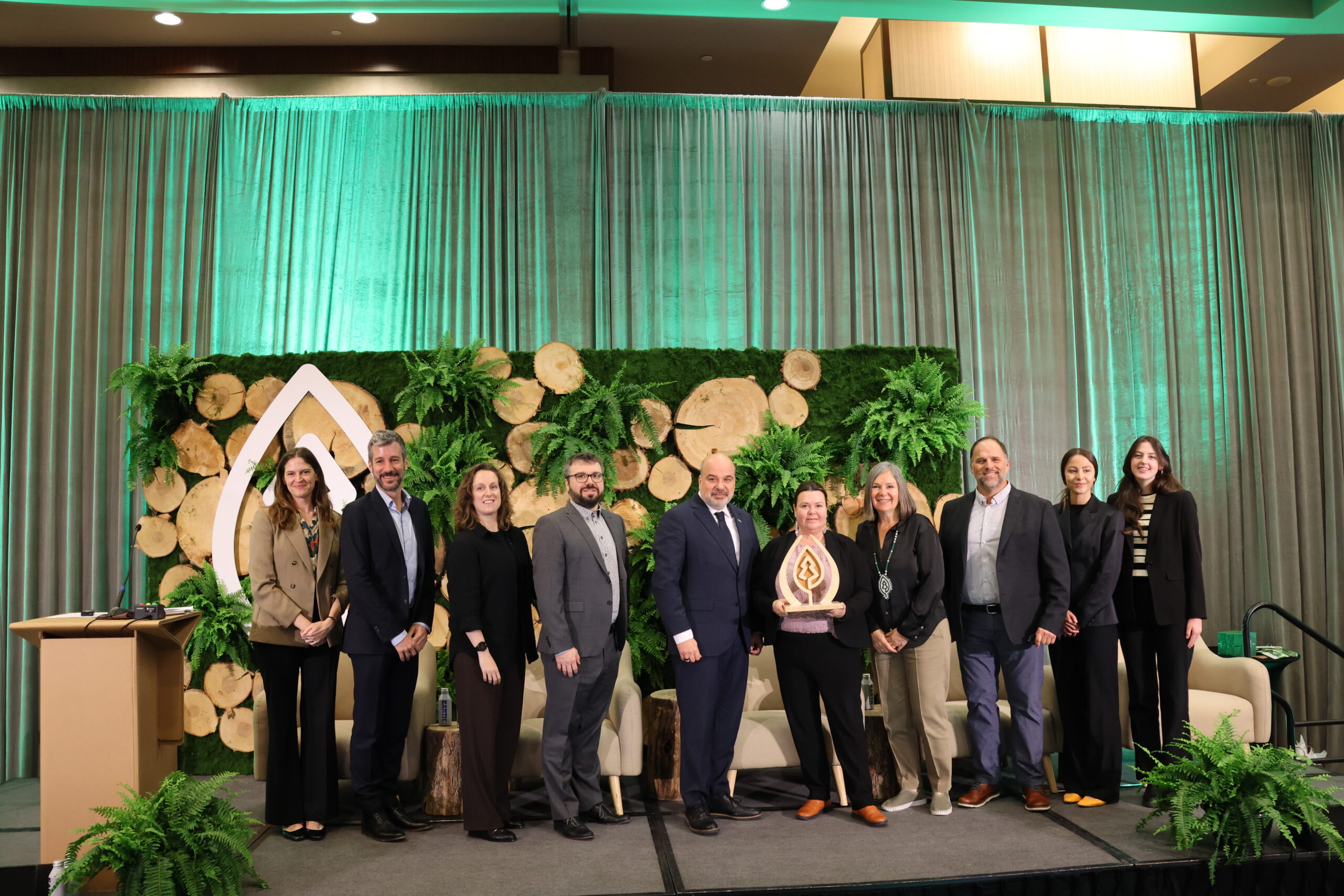
Domtar has a long-standing and collaborative relationship with Tensie and welcomed her to its External Sustainability Advisory Committee (ESAC) in 2025 alongside Jean-Paul (JP) Gladu, principal of Mokwateh, and Hélène Gagnon, chief people and sustainability officer at CAE Inc.
Read on to learn more about sustainability measurement and ROSI in our interview with Tensie.
How would you define ROSI—Return on Sustainability Investment?
ROSI, or Return on Sustainability Investment, is a framework for understanding the financial returns generated by sustainability investments. Rather than viewing sustainability initiatives only through an environmental or social lens—such as reduced greenhouse gas emissions—ROSI looks at how those same initiatives drive tangible and intangible business value.
For example, a decarbonization strategy is not just about lowering emissions. It can also deliver energy cost savings, reduce exposure to energy price volatility, lower maintenance costs, improve worker productivity, and reduce regulatory risk. ROSI provides a structured way to identify, track, and quantify those benefits so companies can understand sustainability as a driver of financial performance, not just a cost.
You have worked with many companies. How do sustainability investments make a difference financially and strategically over time?
Over time, sustainability investments strengthen a company’s operational efficiency, resilience, and competitive position. ROSI identifies nine key “mediating factors” that link sustainability practices to financial performance, including operational efficiency, risk reduction, employee productivity, innovation, and sales and market access.
I can give you a real-world example. I worked with a large utility that installed LED lighting across its facilities. While the company did not pay directly for energy and therefore did not see energy cost savings, a ROSI analysis revealed significant productivity gains. Employees worked more effectively under better lighting conditions, translating into millions of dollars per year in productivity benefits—value that would have been missed without a ROSI lens.
The same logic applies across areas such as water stewardship, health and safety, circularity, and decarbonization. When companies evaluate the full financial picture, sustainability investments consistently show positive returns over time.
What is the biggest challenge for a company our size in adopting a ROSI‑focused mindset for sustainability measurement?
Company size is not the main barrier. The biggest challenge is organizational mindset and integration.
In many companies, sustainability is still treated as separate from core business and finance functions. Sustainability teams track environmental or social outcomes, while finance teams track financial performance—without connecting the two. Accounting systems are rarely set up to capture the financial impacts of sustainability investments, particularly intangible benefits.
To adopt a ROSI mindset, sustainability measurement considerations need to be embedded into business strategy and financial planning from the outset, with clear ROSI‑linked KPIs that allow companies to build historical data, project future scenarios, and compare sustainability investments alongside other capital allocation decisions.
Does ROSI improve revenue through pricing power, customer demand, or market access?
Yes—ROSI can support all three.
Many companies already see this in customer behavior. When customers increasingly ask about sustainability performance during procurement or RFP processes, that demand can be quantified. If a meaningful portion of revenue depends on meeting sustainability requirements, failing to invest puts that revenue at risk. Domtar has started tracking all sustainability-related customer inquiries to see which areas they ask about the most. That’s a great first step.
ROSI also helps identify growth opportunities. By analyzing customer inquiries, market trends, and RFP data, companies can estimate how sustainability performance opens access to new markets or expands share with existing customers. In manufacturing, sustainability also improves margins through lower energy, water, waste, and material costs—directly strengthening profitability.
What is the cost of not making these investments?
Companies are generally good at calculating the cost of action, but much less effective at calculating the cost of inaction.
The cost of not investing in sustainability can include:
- Loss of customers or market access
- Rising energy and water costs over time
- Higher insurance and workers’ compensation costs
- Lower employee retention and productivity
- Increased legal, regulatory, or reputational risk
When these costs are projected over many years, the financial case for sustainability investments often becomes clear. ROSI helps companies compare the upfront investment against the long‑term cost of doing nothing.
How would you recommend we measure sustainability success—financially and non‑financially?
Success starts with clear, material sustainability KPIs that are embedded in business strategy. For example, in forestry‑based businesses, responsibly sourced wood and fiber targets are a critical sustainability metric.
ROSI then layers financial metrics on top of those sustainability KPIs. This can include:
- Revenue protected or gained through certification
- Avoided reputational or regulatory risk
- Reduced costs associated with incidents, crises, or inefficiencies
- Productivity improvements or employee‑related savings
Early success does not require perfect data. It starts with piloting ROSI metrics alongside existing sustainability KPIs, building internal collaboration across sustainability, finance, HR, legal, and operations, and gradually integrating sustainability measurement and ROSI into standard reporting and decision‑making processes.
How does sustainability measurement through ROSI position companies for future regulation or market shifts?
Sustainability measurement through ROSI helps companies get ahead of regulatory change rather than reacting to it.
Whether it’s extended producer responsibility fees, carbon border adjustment mechanisms, or other emerging regulations, sustainability investments can reduce future financial exposure. ROSI allows companies to estimate those future costs and invest strategically to avoid or minimize them.
Importantly, ROSI reframes sustainability as a business strategy rather than a regulatory compliance exercise. Regulations may change with political cycles, but the underlying drivers—resource constraints, market expectations, and operational efficiency—are long‑term realities.
Tell us about your relationship with Domtar.
My relationship with Domtar goes back many years, beginning when I was leading the Rainforest Alliance. During that time, I worked closely with Domtar on sustainable forest management, certification, and stakeholder engagement.
When I later founded the NYU Stern Center for Sustainable Business, former Domtar President & CEO John Williams became our first Advisory Board chair. His leadership helped shape the Center in its early years, particularly around strategy and industry engagement. Since then, we have partnered with Domtar on student projects, sustainability strategy development, and early conversations around sustainability measurement and ROSI.
It has been a long‑term, collaborative relationship, and one where I have learned a great deal from Domtar’s sustainability leadership and practical business approach.