
Summary
Domtar is partnering with NatureServe on a project to benefit forest biodiversity in Mississippi, near our Amory Chip Mill.
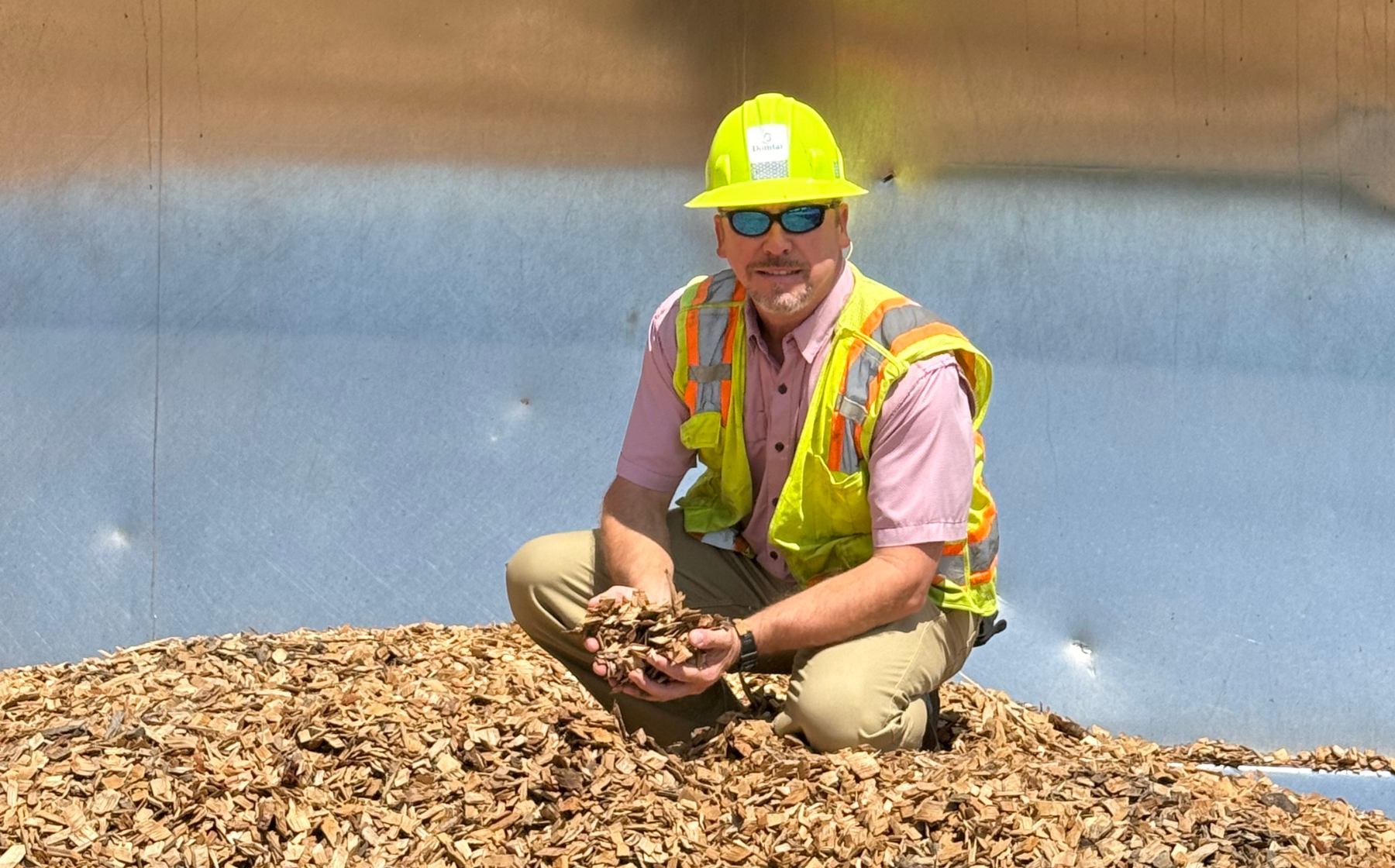
Chad Robertson, Senior Coordinator, Raw Material is the on-the-ground connection for a new partnership Domtar has begun with NatureServe. The partnership will help us protect forest biodiversity in Mississippi.
Chad is based at the Amory Chip Mill in Mississippi. The wood chips produced at Amory are barged along the Tennessee-Tombigbee Waterway to the Tennessee River and then the Ohio River to Domtar’s Hawesville Mill in Kentucky. The Hawesville Mill makes communication papers and southern bleached hardwood pulp used in tissue and towel, and printing and writing papers.
Q: What is the partnership focused on right now?
A: The goal is to turn complex, dense information about at-risk species and ecosystems into practical guidance — when you see this, harvest like this — that forestry professionals, landowners and loggers can use in the field. This work makes it easier to identify and protect important habitats which is an important part of responsible forest management and sustainable fiber sourcing. The current project is focused on the whole of Mississippi’s working forest.
Q: Why is Domtar partnering with NatureServe?
A: NatureServe has decades of scientific expertise and is recognized as a leading source of biodiversity data, including forest biodiversity, across North America. This expertise makes them a great partner to help us achieve our 2030 Sustainability Strategy objectives to “increase landowner engagement in our fiber value chain,” and “positively impact biodiversity.” Working together, we have the knowledge, skills and operational access to achieve our shared goal of improving biodiversity conservation in working forests.
Q: Why is forest biodiversity important to Domtar?
A: We rely on healthy forests to provide fiber to feed our mills and make our products. Healthy forests require biodiversity to thrive. This is why we are investing in this partnership — it’s good for the environment, but it’s also important for our business. I send many barges of fiber up the river to the Hawesville mill every month. Without that fiber, we can’t make paper.
Q: How does being part of something bigger than one company help here?
A: Forest biodiversity challenges don't stop at company boundaries. Many forest products companies operate in the US Southeast and often source fiber from the same regions. By working together, NatureServe and forest companies like Domtar and Weyerhaeuser can use SFI’s existing Professional Logging Manager (PLM) designation to share consistent guidance for loggers and landowners across an entire state. Most mills, certainly all of Domtar’s and Weyerhaeuser’s, require loggers to maintain their PLM designation to haul wood to their mills, so they must log PLM training hours. Sharing practical guidance through an overarching program like this reduces confusion, increases adoption and creates the potential for a much larger conservation impact than any one company could achieve on its own.
Q: How did Domtar get involved in this work?
A: Through strong relationships. This idea originated in North Carolina when Weyerhaeuser and SFI ran the first pilot back in 2024. Domtar, also an SFI certificate holder, got involved in 2025 when Amazon, an important customer and conservation partner approached our sustainability team about replicating the North Carolina pilot in Pennsylvania near our Johnsonburg Mill. That pilot reached roughly 150 logging professionals with information specific to that fiber basin less than a year after the proposal. It was such a success that Domtar jumped at the opportunity to enter into an official partnership with NatureServe when the Mississippi state-wide opportunity arose. It was a good fit for many reasons. But one is I’ve been on the SFI’s Mississippi State Implementation Committee — the group that oversees the PLM designation for Mississippi — for 19 years.
Q: What part of this forest biodiversity project did Domtar support?
A: Specifically, Domtar's contribution helps NatureServe complete descriptions of Mississippi's important habitat features, develop guidance that can be used by forestry professionals and participate in logger training and education efforts. We are also providing in-kind expertise through myself and the rest of the fiber procurement team to help ensure the information is practical and useful on the ground.
Q: How do we know this work will make a difference in forest biodiversity?
A: Earlier pilots in North Carolina and Pennsylvania showed that translating species data into easily recognizable habitat features made the information more understandable and actionable for forestry professionals. The Mississippi project is already bringing together experts from industry, conservation organizations and state partners to review habitat information and develop practical recommendations for landowners and loggers. When we start sharing material with loggers through PLM training, we’ll be impacting forestry across the entire state.
Learn more about Domtar’s efforts to protect forest biodiversity through sustainable forestry and strategic partnerships.