

Summary
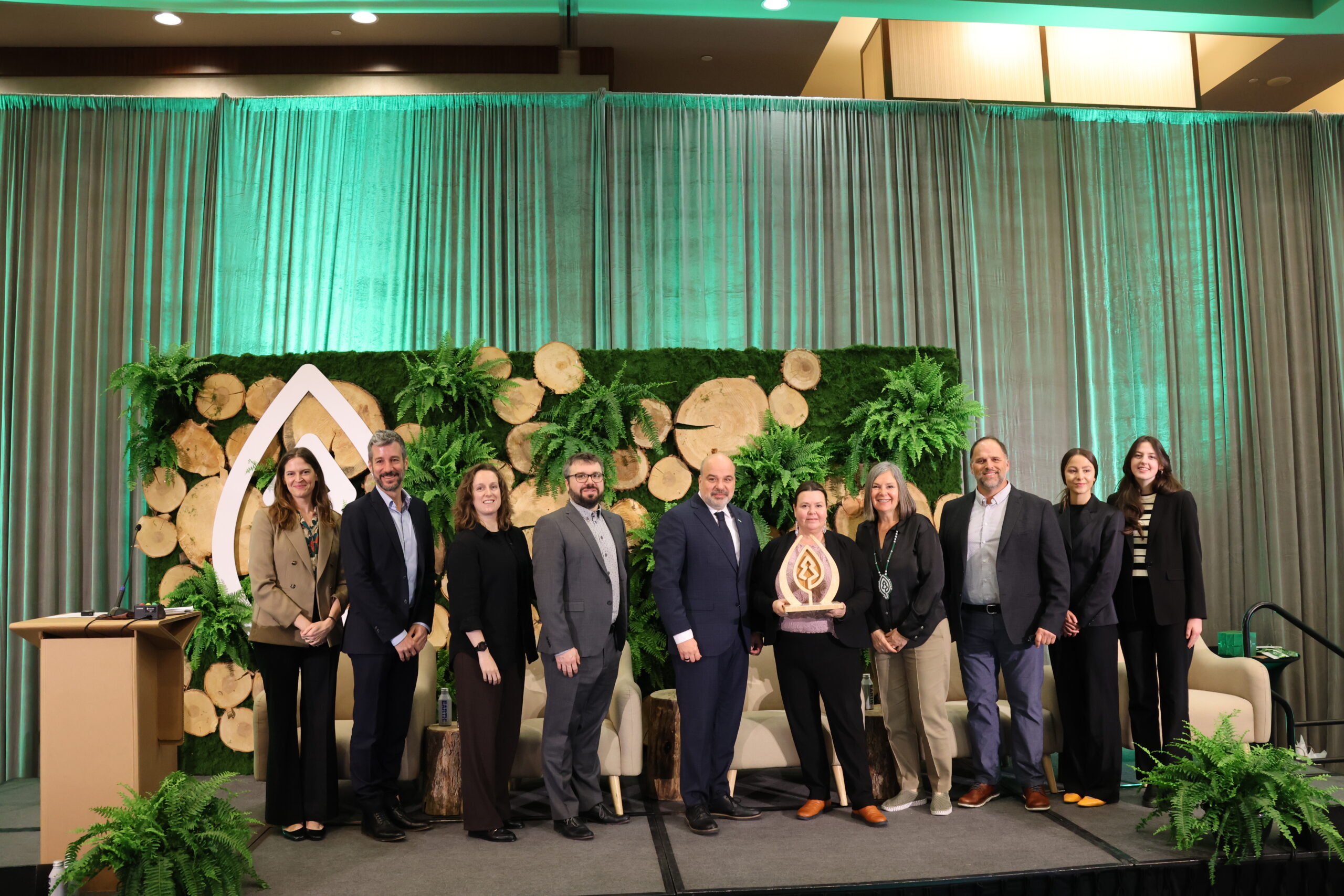
Domtar was recognized by the Sustainable Forestry Initiative® (SFI®) in 2026 with its “Leadership in Conservation” award. SFI pointed to Domtar’s commitment to deep and sustained engagement with the SFI Climate Smart Forestry Initiative and contributions to field-level research as proof points for this award. In this article, we dive into how Domtar is putting Climate Smart Forestry into practice in the forests the company manages in Canada.
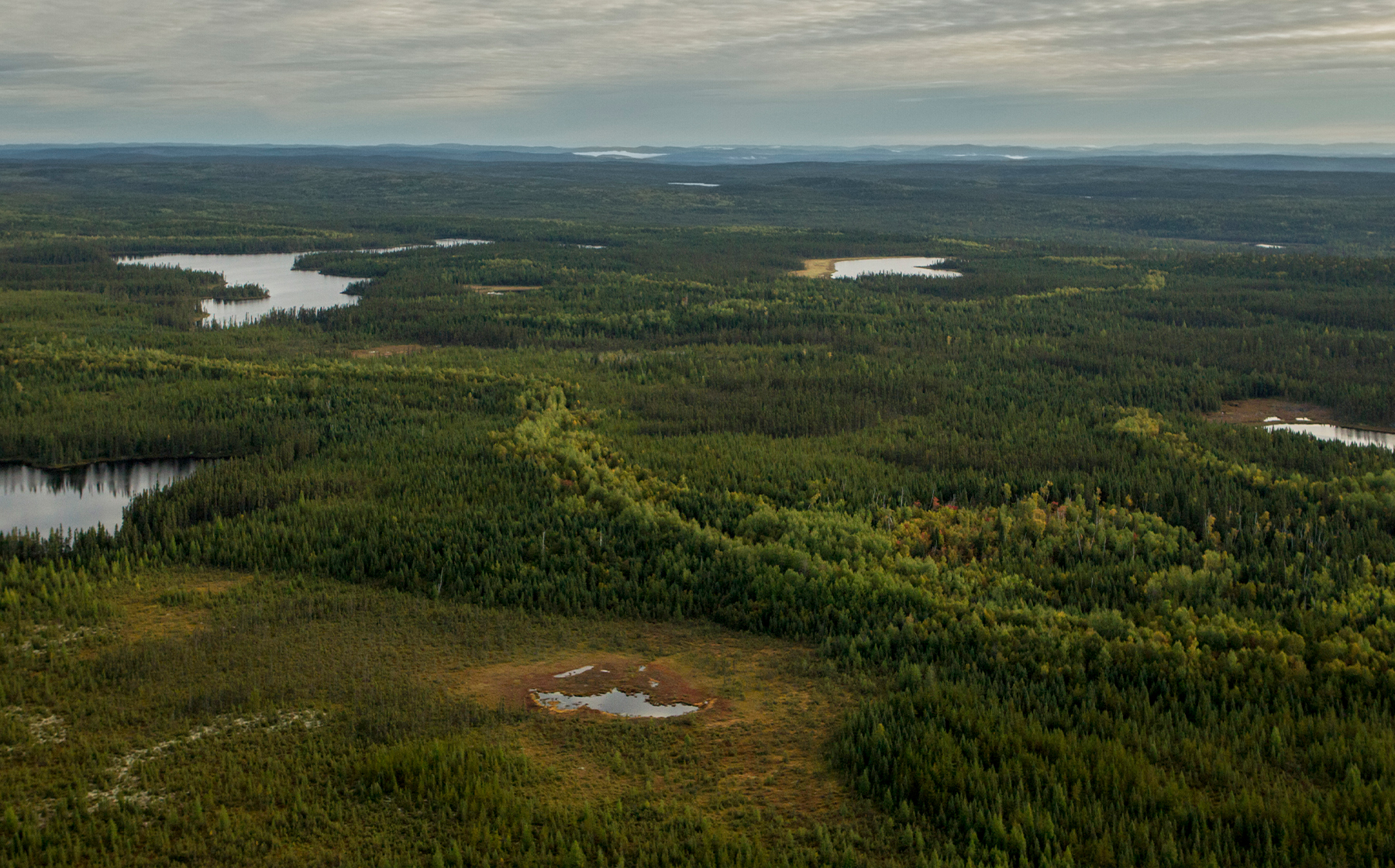
Canada is home to dozens of Domtar operations, including Crown lands Domtar is licensed to manage for fiber sourcing and for which Domtar holds SFI forest management certificates. Domtar also privately owns and manages 3,860,190 hectares of forestland surrounding our Windsor Mill, a fully integrated paper and pulp mill in Quebec.
Samuel Bourque is Domtar’s forestry certification manager and represents the company on the Canadian SFI Climate Smart Forestry Initiative Advisory Committee. In 2022, his team completed a climate risk assessment as an initial step toward identifying ways to improve the climate-friendliness of Domtar’s responsible forest management practices.
SFI’s 2022 Forest Management Standard includes objectives for Climate Smart Forestry and Fire Resilience.
“We wanted to accelerate our progress from taking action on the ground to managing our forests for the future,” Samuel says. “SFI’s Climate Smart Forestry objectives gave us the foundation to accomplish this.”
What is the SFI Climate Smart Forestry objective?
SFI’s Forest Management Standard defines the Climate Smart Forestry objective as, “To ensure forest management activities address climate change adaptation and mitigation measures.”
6 Ways Domtar Puts Climate Smart Forestry into Practice
Domtar is committed to putting Climate Smart Forestry into practice, and we’re seeing measurable results in six key areas:
1. Transporting logs using mega-load and hybrid logging trucks and using real-time data to inform harvester operations.
We reduced our greenhouse gas emissions by adopting the use of mega-load and hybrid logging trucks. By using mega-load trucks (off-highway heavy-duty vehicles), we reduced diesel consumption by approximately 30 percent; using hybrid (electric/diesel) logging trucks reduces fuel use by 10–15 percent.
“Mega-load trucks can transport significantly more lumber per trip while reducing diesel consumption,” Samuel shares.
Additionally, Domtar now receives real-time data from harvester heads in the forest, which allow teams to confirm optimal operating conditions and adjust accordingly.
“These operational improvements help reduce emissions while improving overall efficiency,” says Samuel.
2. Protecting forest soils and natural carbon stores.
Domtar already had practices in place to protect peatlands, which store significant amounts of carbon, and to minimize soil disturbance by directing forestry equipment along designated routes known as skid trails. The risk assessment reinforced the importance of these practices in maintaining healthy soils, preserving natural carbon stores and supporting long-term forest productivity.
3. Using prescribed burning to reduce wildfire risks and improve forest regeneration.
When a tornado swept through a forested area near Lawrence Lake, Ontario, it left behind large quantities of fallen trees and debris, creating conditions that could increase the severity of future wildfires.
To address this risk, Domtar participated in a carefully planned prescribed burn covering more than 600 hectares. By using controlled fire to remove accumulated vegetation, the operation reduced fine fuels, such as grasses, leaves and small branches, by 70–100 percent, and heavier fuels, including fallen trunks and logs, by 40–70 percent.
This type of active forest management can contribute to long-term forest resilience.
“Improving resilience requires direct intervention at the landscape level,” Samuel explains. “The prescribed burning in Ontario reduced fuel loads and improved forest regeneration conditions.”
4. Adapting our forest regeneration practices.
Domtar is adapting and accelerating forest regeneration through drone seeding in Ontario, which limits our operational footprint and reduces the need for additional herbicide treatments.
Drone seeding also gives us greater flexibility in our seeding operations.
5. Introducing a hybrid poplar program in the forests owned by Domtar around the Windsor Mill.
Forests are primarily regenerated through natural processes and responsible harvesting practices. However, some areas benefit from a more active approach, including reforestation (renewing an existing forest) and afforestation (turning or returning land to forest after other uses).
Around our Windsor Mill in Quebec, a hybrid poplar program demonstrates how forest regeneration and resource efficiency can work hand in hand. Developed through years of applied research and operational experience, the program uses residual materials from our pulp and paper operations to support tree growth. Biosolids provide valuable nutrients, while lime-based residuals help balance soil acidity, creating more favorable conditions for young trees.
“This approach is now integrated into our operations and applied where it provides the most value,” says Samuel. “It improves forest productivity, supports carbon sequestration and contributes to more efficient use of resources.”
6. Partnering with multiple university programs and conservation organizations on a special project to conserve Pileated woodpecker habitats.
The project resulted in a field guide that helps forest workers identify nesting sites and apply appropriate protection measures in the field.
“Biodiversity is already part of Domtar’s day-to-day decision making in the forests,” says Samuel. “Tools like this help our foresters apply it consistently.”
He adds, “Protecting these habitat features benefit much more than a single species.”
The team noticed that the conservation measures have helped other important avian species in the forest, including the Northern Flicker, Common Goldeneye, Hooded Merganser, American Kestrel, Northern Saw-whet Owl and other water birds.
“None of these outcomes happen by chance — they are enabled by collaboration, innovation and people in the field.”
Climate Smart Forestry in Action
“All of these decisions contribute to something much bigger,” says Samuel. “Climate Smart Forestry is not just about understanding risk; it’s about acting on it. It’s about making informed, deliberate decisions on the ground, every day. … Our decisions don’t just affect today’s landscape — they shape the forest for the future. And in many ways, they shape our legacy as Domtar.”
Learn about other ways we apply sustainable forestry and environmental best practices to our operations in North America: