


As regulatory expectations surrounding product safety and material transparency continue to evolve, Domtar remains focused on delivering paper solutions that help our partners move forward with confidence. Clarion® thermal paper is BPA-free, BPS-free, and phenol-free, while maintaining the performance standards customers expect from standard thermal paper.
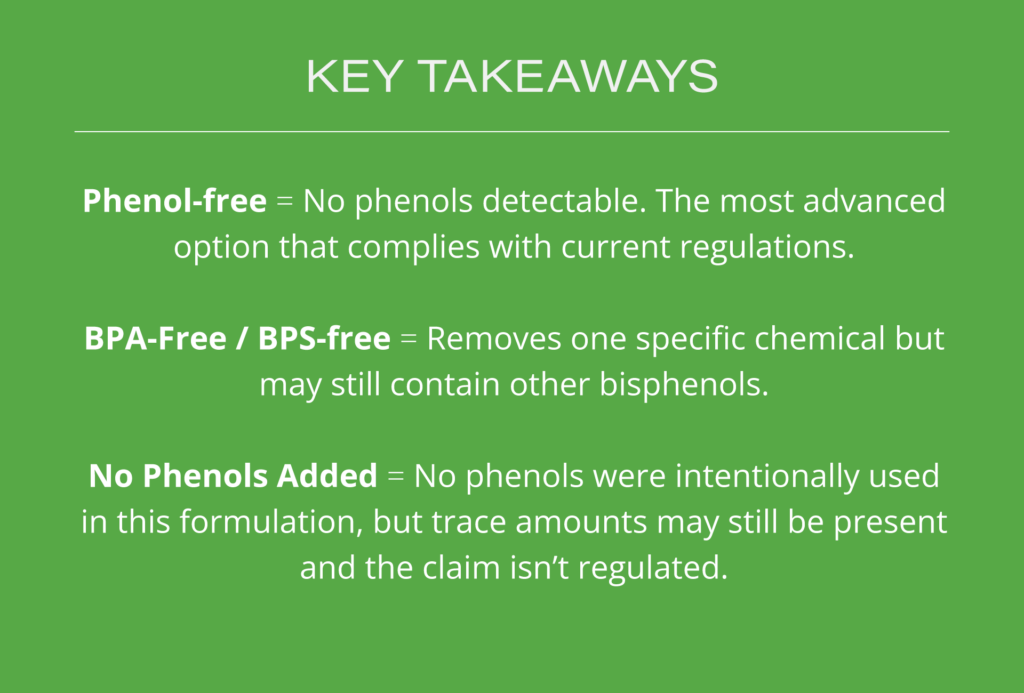
At Domtar, phenol‑free means our products are made without detectable phenolic compounds. Because this definition applies broadly, it also means no bisphenols are used, including BPA, BPS, or related substances.
We verify this through third-party testing that confirms no detectable levels of Bisphenol A (BPA) or Bisphenol S (BPS) in the finished product, using highly sensitive methods with a detection limit of 1 ppb (parts per billion), which is equal to 1 drop of water in an Olympic-sized swimming pool. This approach helps ensure our products meet Domtar’s standards for compliance, quality, and customer confidence.
“BPA‑free” means a product contains no Bisphenol A, while “BPS‑free” means it contains no Bisphenol S. Each claim refers only to the specific bisphenol named and does not guarantee the absence of other phenols or bisphenols.
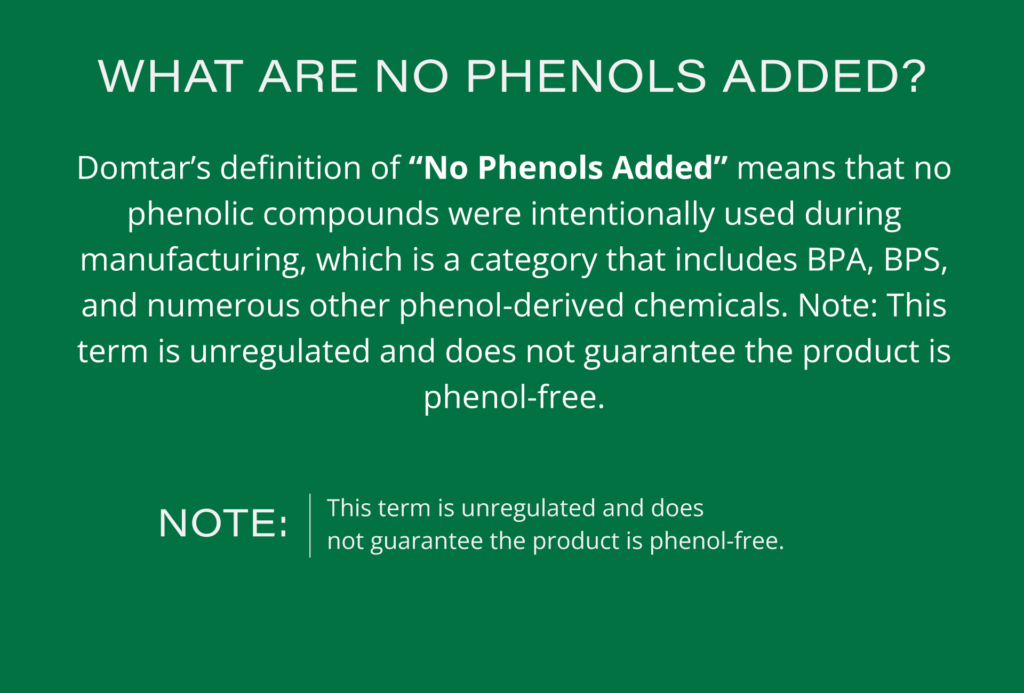
As BPA use declined, BPS was widely adopted as a replacement in thermal receipts. Regulatory agencies and advocacy groups have since expanded scrutiny beyond BPA, prompting many organizations to move away from single-chemical claims toward broader phenol-free specifications.
Understanding these differences helps businesses:
Understanding the difference between “Phenol-free,” “BPA/BPS-free,” and “No Phenols Added” is becoming increasingly important as new laws are being introduced to regulate bisphenols found in products consumers may come into contact with on a regular basis, like thermal receipt paper. Here’s a clear overview of the latest regulations in California, Washington, and Canada, which are shaping broader market expectations. These actions often influence future regulations in other regions.
California Proposition 65 – Bisphenol S (BPS) Warning Requirement
Effective Date: December 29, 2024
Products containing Bisphenol S (BPS), such as in thermal receipt paper, may require a Proposition 65 warning for sale in California if they result in consumer exposure to BPS.
The warning must appear before exposure, meaning it must be displayed at the point of sale or through signage. Printing the warning on the receipt itself does not comply.
This regulation focuses on consumer awareness rather than banning chemicals.
California Safe Harbor Guidance
Safe Harbor Levels (OEHHA)
Under California’s Prop 65 framework, the Office of Environmental Health Hazard Assessment (OEHHA) establishes safe harbor levels, which set exposure thresholds below which no warning is required. These thresholds are based on risk assessments and scientific data, often including animal studies. However, many chemicals, such as BPS, currently have no established safe harbor levels, meaning businesses must provide a warning if exposure is possible.
Washington State WAC 173337 – Bisphenols Restrictions
Effective Date: January 1, 2026
Washington has enacted one of the strictest regulations in the U.S., restricting that use of thermal paper that contains any bisphenols, including BPA and BPS. After this date, it became unlawful to manufacture, sell, or distribute such products in Washington.
This means that all receipt and label papers used in the state must not contain intentionally added bisphenols in 2026, and businesses must be using compliant materials.
Additionally, Washington clarified that all products manufactured after Jan 1, 2026, and shipped into the state must not have intentionally added bisphenols with a detection level of 200 ppm, and there are no labeling alternatives for noncompliant products.
Canada – Bisphenol Regulations
Bisphenols in Canada are regulated under the Canadian Environmental Protection Act, 1999 (CEPA) and assessed through the Chemicals Management Plan (CMP).
While Canada has not enacted a receipt‑specific restriction on bisphenols in thermal paper, bisphenol A is regulated under the Canadian Environmental Protection Act, and federal authorities continue to assess BPA and its alternatives through mandatory reporting and risk evaluations that may lead to future restrictions.
Why These Regulations Matter
Regulatory Trends: Thermal Receipt Paper and Bisphenols
Across the globe, regulators are taking a closer, more thoughtful look at the chemicals found in everyday products, including thermal receipt paper. Much of this attention is focused on bisphenols, a group of chemicals long used to create printed images on receipts. As awareness grows around potential long-term exposure, governments are increasingly moving to limit or phase out these substances.
In the United States, momentum is building at the state level. Washington State has already restricted all bisphenols in thermal receipt paper, and California is advancing legislation that would apply similar class wide limits. Other states including New Jersey, Maine, New York, Minnesota, Vermont, and Connecticut, have enacted or proposed measures targeting BPA, BPS, and related chemicals. Taken together, these actions point in one clear direction: regulatory expectations are tightening, and what’s acceptable today may not be tomorrow.
Canada has not implemented a national ban specific to receipt paper, but bisphenols remain under active review through federal chemical review programs. In response, many retailers and brands have already chosen to transition to phenol free receipts, an intentional step to reduce potential exposure and stay aligned with evolving guidance.
Europe is further along this path. BPA has been effectively removed from thermal receipt paper for several years, and newer regulations reflect a broader concern about the entire bisphenol family, rather than addressing one chemical at a time.
What This Means for Consumers and Businesses
The regulatory signal is becoming increasingly clear:
As regulations continue to evolve, moving toward phenol-free thermal paper is widely seen as a practical and proactive choice, one that protects consumers, supports long-term sustainability goals, and provides businesses with greater confidence and stability in a changing regulatory landscape.
Clarion® is the first phenol-free thermal receipt paper that looks and performs the same as standard POS paper, that is WMU certified recyclable and made in the USA.
We created Clarion® thermal paper to address the need for alternate POS papers due to increasing industry regulations and ENGO activities. Our customers want to make the right choice when it comes to POS papers, but they need to look and work just as well as the ones they’re used to.

(Please use your business information only.)
Regulatory requirements vary by state, but the national trend is moving toward regulating all phenol-based developers in thermal paper. Key requirements include:
California (Prop 65 and proposed AB1604)
Washington
Connecticut
Domtar takeaway:
U.S. states are phasing out phenols; distributors and retailers must align procurement with phenol-free solutions to avoid compliance risks.
“Phenol-free” means the thermal coating contains no phenol-based chemical developers, including:
Instead, phenol-free papers use alternative formulations with rigorous safety standards. For Domtar Clarion® thermal paper products, “phenol‑free” means phenols are undetectable across the entire formulation and finished product, based on highly sensitive testing (100 ppb detection limit), and not just BPA or BPS replacement.
BPA-free
BPS-free
Why This Matters
Domtar implication:
To stay ahead of evolving regulations, Domtar Clarion® thermal papers are phenol-free, not just “BPA-BPS free”.
Clarion® thermal paper is engineered to meet modern regulatory requirements by eliminating intentionally added phenolic developers from its formulation.
Clarion® technology supports compliance with:
By using a phenol-free formulation, Clarion® thermal paper helps retailers align with both current legislation and anticipated regulatory trends.
Yes. Clarion® thermal paper is manufactured without intentionally added BPA or BPS. Its formulation eliminates traditional bisphenol developers entirely.
This makes Clarion® POS thermal paper suitable for businesses operating in jurisdictions with strict bisphenol regulations, as well as those seeking to implement proactive environmental, social, and governance (ESG) initiatives.
Using Clarion® POS thermal paper can help reduce risk by:
As legislation increasingly shifts toward broader chemical class restrictions rather than single-substance bans, adopting phenol-free solutions like Clarion® thermal paper can serve as a long-term compliance strategy.
Clarion® thermal paper is formulated without the use of phenols, including BPA, BPS, and other bisphenols.
Domtar has implemented rigorous control measures and third-party testing procedures to ensure that Clarion® thermal paper is phenol free.
