




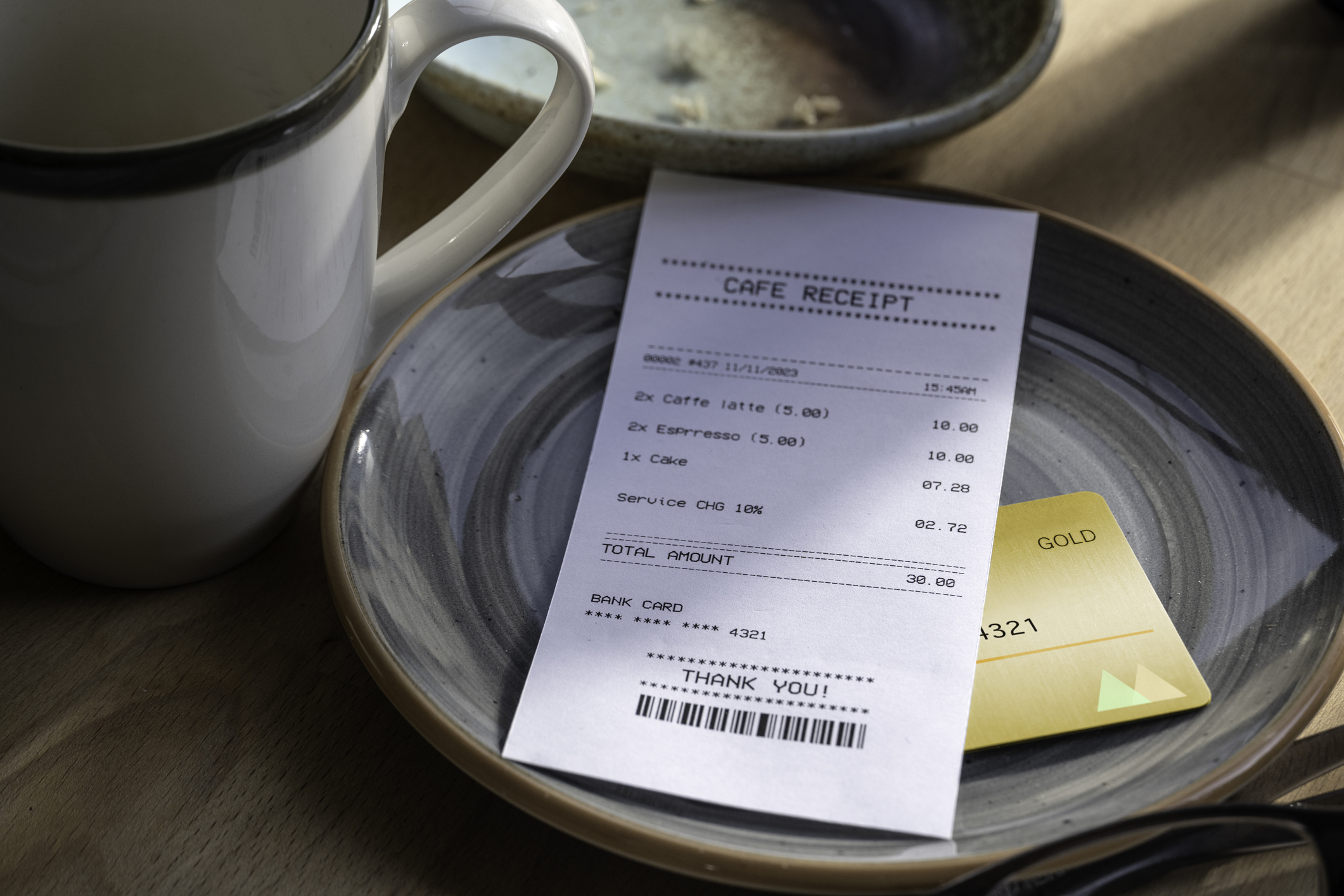
In a world where nearly every transaction runs through apps, emails, and digital wallets, paper receipts may seem old-fashioned, but they remain one of the most reliable tools in retail. Digital receipts require sharing personal data, managing inbox clutter, and relying on technology to store and retrieve purchase records. Paper receipts don’t. They give customers instant, private control of their proof of purchase with no logins, no tracking, and no technological dependencies.
Beyond convenience, there’s something undeniably reassuring about having a record you can hold in your hand. For retailers, that simplicity translates into fewer disputes, reduced fraud, and greater clarity at the point of sale. For customers, it provides peace of mind long after the purchase is made.
In a digital-first world, paper receipts still deliver what shoppers and retailers value most: transparency, trust, and control.
Paper Receipts Help Protect Consumers and Retailers from Theft
Retail theft has reached alarming levels in recent years. According to the U.S. Bureau of Justice, losses due to shoplifting, employee theft, and other forms of retail crime reached $61.7 billion in 2019 and have continued to rise, reversing a decades-long decline. In response, many retailers are re-evaluating how to verify purchases and reduce losses. Safeway, for instance, has introduced receipt-scanning gates in several self-checkout areas, requiring proof of purchase before exiting.
“Most shoppers are honest, and you never want to install measures that drive them away,” notes Karl Langhorst, former Senior Director of Loss Prevention at Kroger. “But you can’t continue to have losses so great that they potentially drive you out of business.”
In this environment, paper receipts play a quiet but powerful role. They serve as tangible proof that an item was properly purchased, discouraging theft, and helping store personnel resolve disputes quickly. For consumers, that same slip of paper can mean protection against wrongful accusations or issues with returns.
Paper Receipts are Often the Preferred Choice
The renewed appreciation of physical receipts is not a reaction against technology or an indictment upon consumer honesty; it’s a reflection of a shared desire for clarity and accountability in the retail experience. In a 2023 poll by Tulchin Research for the Paper Receipts Converting Association (PRCA), 72% of U.S. consumers said they prefer a paper receipt when shopping in person, compared to 25% who prefer a digital option.
At the same time, 85% of consumers say they want the choice between paper or digital receipts (Industry Intelligence, Inc.). People value options, not mandates, and they view paper as a reassuring form of control. In fact, 67% of respondents worry that eliminating paper receipts could lead to misuse of personal information (Industry Intelligence, Inc.). Offering paper simply signals that a retailer respects customer preferences and privacy.
Paper receipts also support operational clarity. They facilitate smooth returns, help consumers track spending, and provide the physical backup often required for tax or warranty records.
Receipt Paper is Evolving to Meet Modern Expectations
Despite common misconceptions, receipt paper is recyclable and can be sustainably produced. In many cases, it can even carry a smaller carbon footprint per transaction than digital systems, whose energy use and server emissions often go overlooked. As conversations about material safety and environmental responsibility evolve, Domtar has introduced a new option that reflects those priorities while maintaining the dependable performance retailers expect: Clarion™. The first phenol-free certified-recyclable thermal receipt paper per WMU standards that looks and performs the same as standard POS paper, Clarion™ demonstrates that receipt papers can be both responsible and high-performing, offering retailers a modern choice without changing the checkout experience customers prefer.
As retailers adapt to a complex mix of theft, privacy, and technological challenges, physical receipts are proving their enduring value. They protect consumers and business alike, provide a reliable layer of documentation, and reinforce the sense of trust that underpins every transaction. With modern options like Clarion™, retailers can maintain that trusted experience while choosing a receipt paper that reflects today’s expectations for safety and responsibility.
To learn more about Clarion™ or request additional information, click here. You can also reach out directly at commercialprinting@domtar.com.