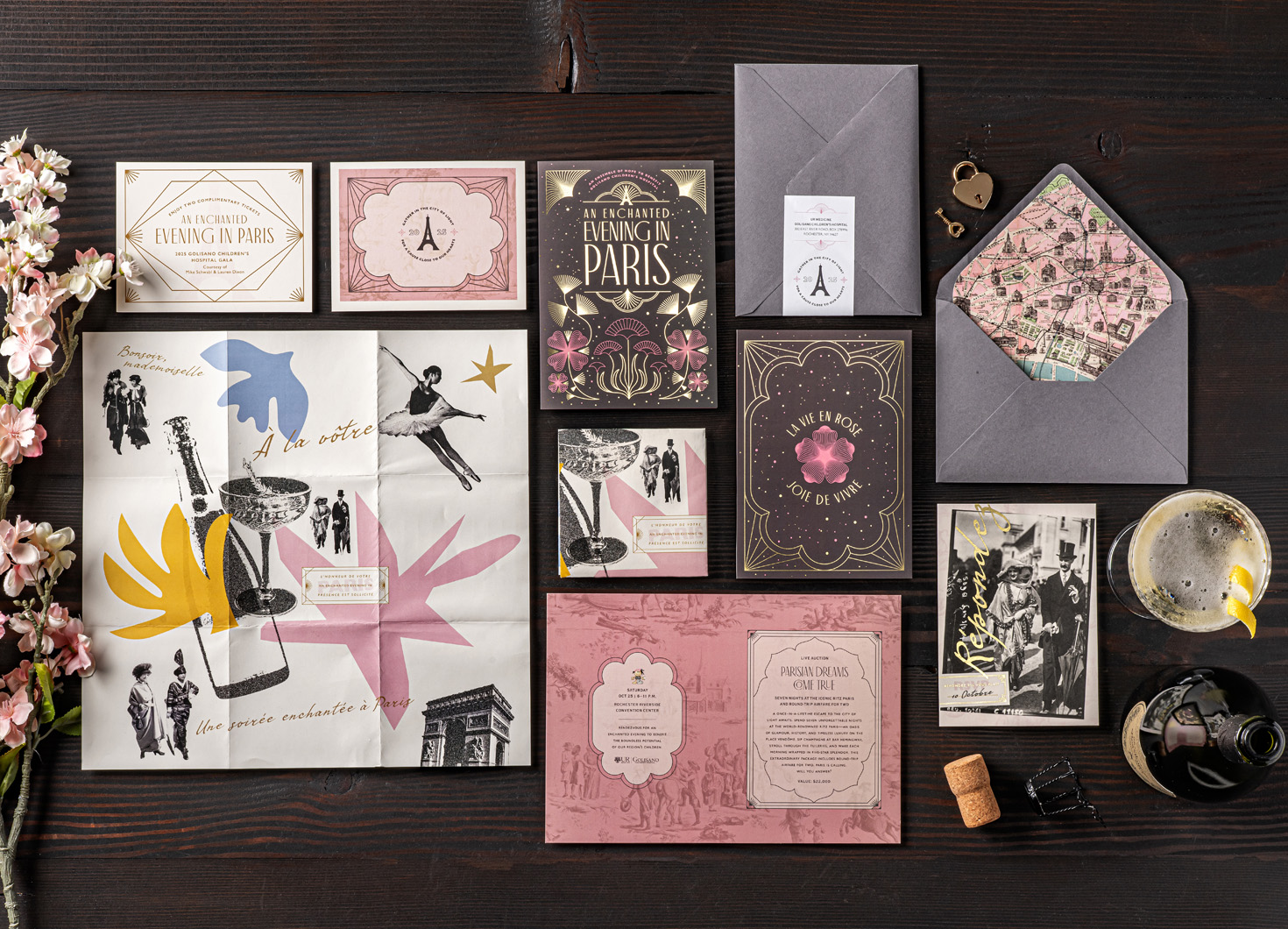





- Nicholas.Pearson
Print design requires precision, planning, and collaboration, offering a tremendous amount of opportunity in return. From understanding budget constraints to selecting the right paper and print techniques, asking the right questions early in the process can save time, reduce stress, and elevate your final product. Whether you’re a seasoned designer or taking on your first print job, use this list as a guide for thoughtful conversations with clients, printers, and paper merchants:
What is the print budget for the project?
→ Ask: Client or marketing team
Answering this question requires considerations like:
-
-
- What is the page count and size of the piece?
- How many pieces do you need printed?
- How will the piece be distributed?
-
Quantity, size, and medium may not be end-all, be-alls when it comes to conversations around budget, but they have considerable impact on the final price of your project. For example, consider how your audience will receive and interact with the print piece, since distribution choices can influence both cost and design considerations. If you’re mailing your piece, keep in mind that different basis weights affect postal requirements. The USPS has an incredible promotions and incentives program designed to help you save on mail pieces. While the full terms of eligibility vary from promotion to promotion, they all start with the incorporation of direct mail into your communications strategy. Take advantage of the discounts the USPS is offering, because every dollar saved on postage is a dollar you can reinvest back into your project’s budget.
Which type of paper will best support my design concept?
→ Ask: Educate yourself, then consult with paper merchant or printer
Your medium should enhance your message. Consider thickness, texture, and finish and request samples from different paper mills to determine what’s available and what satisfies your desired look and feel. Uncoated paper provides a feel and appearance that comes across as trusted and sincere—and will amplify messages instead of detracting from it. Think of the type of imagery your brand will feature. Do you need vivid pops of color? A 98 bright white sheet, like Cougar® Smooth or Super Smooth, provides the perfect canvas for bright color that commands attention. Looking to provide a feeling of nostalgia or add a trendy Instagram style to your images? Cougar® Natural will deliver a memorable printed piece.
Both uncoated and coated papers can lead to professional results, but your decision depends on the feeling you’re trying to convey and the brand standards you’re adhering to. It’s important to see samples from the printer you are using to confirm you are satisfied with the quality of their work. Bonus points if you can get samples printed on the paper you want to use in your piece. Swatchbooks are also a great way to evaluate a sheet when considering your options for a print piece.
How should I print my project – offset, digital or production inkjet?
→ Ask: Printer
The answer depends on quantity, size and customization. Offset printing is a traditional method that transfers ink from metal plates to a rubber sheet before applying it to paper. This method is ideal for high-volume printing with consistent quality. You do not have the option for variable data or customization.
In contrast, digital printing directly prints from a digital file onto paper, offering flexibility, but only for short runs and variable data printing. You have less flexibility of size and format since you are limited by the digital press sheet size
Production inkjet printing deposits tiny droplets of ink onto paper to create high-resolution documents or images. Since it doesn’t require printing plates, the method is ideal when creating multiple versions of a project (or projects) on the same print run.
Depending on your need, offset printing is more cost-effective for large print runs due to lower per-unit costs but requires upfront setup expenses. Digital printing is ideal for smaller runs, allowing on-demand printing with minimal setup fees. Production inkjet is flexible enough to create all kinds of customized and personalized print pieces, ushering in a new era of innovation regarding how print projects are made, look, and feel.
Regardless of which method you choose, be sure to ask for a proof before you sign off on a final run. Whether physical or digital (or both), proofs help you catch any mistakes or make necessary adjustments before you print.
What types of specialty techniques are available like embossing, die-cutting, or spot varnish, and are they within my budget?
→ Ask: Printer
Adding special finishes like embossing, foil stamping, UV coating, and die-cutting can make print stand out but can also increase costs.
These embellishments give your project a high-end look, which is excellent for branding and premium packaging, but also consider your budget. Investing in these finishes can be worthwhile if you want a strong first impression but keep it simple for everyday prints.
Where can I find more information about designing for print?
→ Ask: Domtar!
A successful print project starts with curiosity. The more you ask, the more control you’ll have over the outcome. Don’t hesitate to loop in your printer, paper merchant, or production partners early — they’re there to help bring your ideas to life in the best possible way. By taking the time to educate yourself and ask thoughtful questions, you’ll not only create better work, but you’ll also build stronger relationships with your production team along the way.
Print design is about bringing curiosity, creativity, and strategy together in a way that delivers impact. Every choice—from budget to paper to print method—shapes both the effectiveness of your project and the impression it leaves behind. By asking the right questions and collaborating closely with your partners, you set yourself up for success while avoiding costly surprises.