




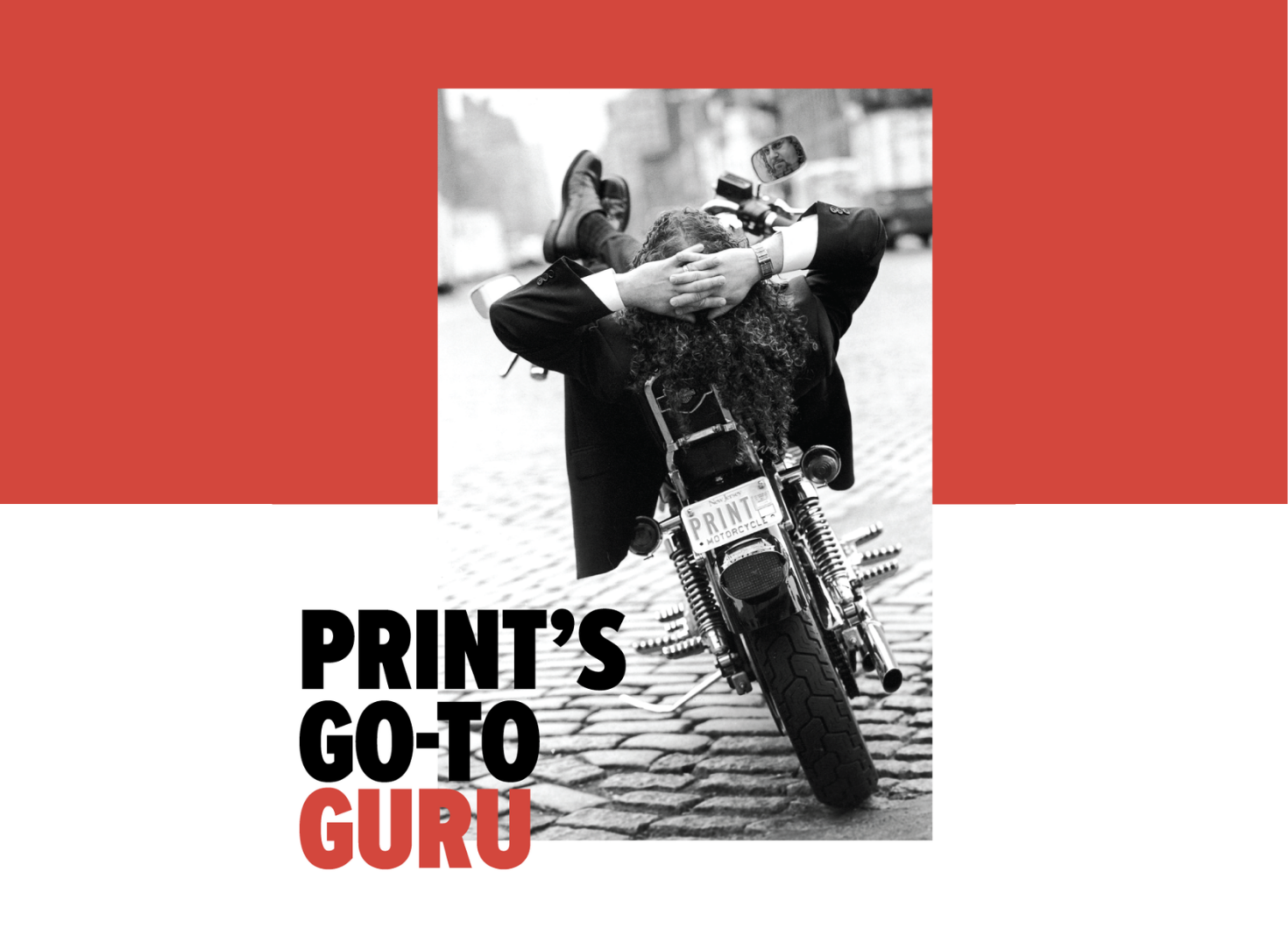
In a crowded commercial print market, standing out rarely starts with playing it safe. For printers looking to differentiate themselves, the real advantage often lies in education, experimentation, and the willingness to push creative boundaries alongside designers and clients. We sat down with David Drucker—aka the Print Guru—a longtime print innovator and creative partner to designers, to talk about what truly sets commercial printers apart today. From “designing for press” to sharing knowledge openly and treating every job as an opportunity to experiment, David explains how printers can evolve from being vendors and become trusted collaborators who bring ideas to life in unexpected ways.
How can designers and printers better educate themselves—and each other—to unlock more creative and effective print solutions?
If a printer does not know enough about different techniques, they should learn about them. This always helps with future conversations. A designer can radically change their creative based on knowing about those techniques and equipment.
Be an influencer in your profession. Be open and free in sharing information. There are no secrets in our industry. The industry isn’t going to survive if we don’t share information with each other. Feel free to go out and educate and try and develop things in a creative manner. Try to explain why you created it and how you did it.
Master your craft. Sharing knowledge and experiences that others haven’t encountered before captures attention effectively.
How can printers experiment rather than rely on “safe” approaches?
Experiment with papers and presses. Different papers have different results on various presses, i.e, running a specific paper on a Ricoh will give a sheen to the print while an HP Indigo will have a much flatter result. These are techniques I call “Designing for Press”.
Bonus: David referenced a past project with Albert Einstein’s helix—the client had no idea how it would turn out, but David suggested using digital foil to achieve a look of swirling, reflective shapes. The result was mesmerizing. It opened up new ways for David to talk to clients: he shows them the basic idea and, if they’re open, pushes it further to create a sense of motion or texture. “It’s a leap of faith,” he explained, “and once they see what you can do, they come back.”
How honest can you get with a client?
Don’t be afraid of giving your true ideas to your clients. You never know when a client will switch directions because of what you have said. This dialog will have your clients come back again and again. The more you stay in the ‘safe’ zone, the less likely you will be able to express your creativeness. There is no ‘stupid’ question. This brings up a great deal of dialog that one would normally not have.
How can printers create their own opportunities—and their own luck—by proactively introducing new ideas and materials to clients?
Too many sales reps and production managers get stuck doing the same old “safe” approach. They never show clients new techniques or try exotic materials. An example would be to go to an engraver and ask to hold their samples. Bring those samples to your next client meeting. You may not sell that technique immediately, but you’ll plant seeds.”
Do you have any final words of wisdom?
Listen closely, speak honestly, and use every project as a chance to show what’s possible. Become an active listener and pick up on subtle hints. If a designer says, “I’m picturing a moodier paper stock,” that can be your cue to show them a deep chocolate felt with a gold foil. If they talk about wanting something that exudes texture, show them an embossed or debossed approach. Even if that project doesn’t go through, your willingness to experiment will open their eyes—and they’ll remember you. When you take those leaps of faith and show clients what you can do, they don’t just remember the project—they come back for what’s next.
Your Value Grows with Your Relationships
Across every part of the conversation, one theme is clear: differentiation isn’t about having secret techniques or the latest piece of equipment – it’s about mindset. Printers who educate themselves, share what they know, and aren’t afraid to experiment create deeper relationships with designers and clients. David treats every project as a chance to experiment. Often, a design that works can be refined further. “You produce something, see how it looks, and say, ‘Next time, maybe I’ll do it with an embossed swirl or a slightly thicker application of foil.’” By mastering their craft, embracing experimentation, and proactively introducing new ideas, commercial printers can turn routine jobs into creative partnerships.
Check out the latest issue of Paper Matters magazine to hear more from David or explore more tips and tricks within the industry.